
PRP Injections, Acupuncture & Recovery Therapies in Chicago
When pain or stiffness gets in the way of your day, it helps to understand your options. We offer PRP injections, acupuncture, WINBACK, Game Ready, and NormaTec at our Chicago office.
We start with your symptoms, medical history, and what you hope to get back to doing. These treatments work differently, and the evidence behind them varies. Some may help with symptoms; others have more limited research.
We’ll talk through the possible benefits, risks, and alternatives so you can make a decision that fits your situation.
Five options.
A plan built around you.
PRP injections
Acupuncture
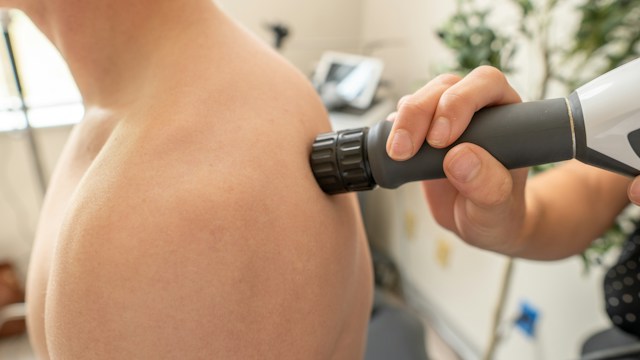
WINBACK TECAR
Game Ready
NormaTec boots
Platelet-rich plasma (PRP) injections
PRP is a concentrated preparation of platelets from your own blood. Platelets contain growth factors and other proteins involved in the body’s response to injury. That biological role does not, by itself, prove that a PRP injection repairs damaged tissue.
PRP has been studied for knee osteoarthritis and some tendon disorders. Whether it is a reasonable option depends on the specific diagnosis, the evidence for that condition, and the care you have already tried.
It starts with a blood draw
A small amount of blood is drawn from your arm, similar to a routine blood test. Because PRP is prepared from your own blood, no donor blood is used.
Your platelets are concentrated
The blood sample is placed in a centrifuge, which separates its components. A platelet-rich portion is then prepared for your treatment. The exact concentration and preparation may vary depending on the treatment approach.
PRP is delivered to the targeted area
The prepared PRP is injected into the area being treated using sterile technique. The injection approach and any treatment schedule depend on your condition. Ask us what the proposed procedure involves before deciding.
Looking for the evidence? See the PRP studies and clinical guidance below.
What does the research tell us?
For knee osteoarthritis, some studies find improvements in pain or daily function, while others find little or no advantage over a placebo injection. A 2025 review found possible short-term benefit, with substantial differences between studies and no clear benefit at 12 months. In the RESTORE trial, PRP did not significantly improve pain or cartilage loss compared with saline at one year.
Professional recommendations also differ. The ACR/Arthritis Foundation guideline recommends against PRP for knee and hip osteoarthritis. AAPM&R’s 2026 guidance supports considering it for selected people with mild-to-moderate knee osteoarthritis who still have symptoms after conservative care.
We’ll discuss how the evidence applies to your situation and alternatives such as exercise, physical therapy, or other appropriate care. Findings about knee arthritis should not be assumed to apply to every tendon or muscle injury.
What might I notice afterward?
Some people notice symptom relief over time; others notice little or no change. How much relief you might get, and how long it might last, cannot be predicted.
Temporary pain, swelling, bruising, or bleeding can occur. Infection is also a possible risk. Your health conditions, medications, and any blood or bleeding disorders matter when deciding whether an injection is suitable.
Ask for instructions about activity and follow-up. Do not stop prescribed medicines on your own.
Symptom relief is not the same as repair.
PRP has not been established as a way to regrow lost cartilage, reverse arthritis, or reliably speed tissue healing. It is not a guaranteed way to avoid surgery.
Before treatment, we’ll discuss reasonable expectations, risks, other options, and anticipated costs. PRP should not replace a diagnosis or rehabilitation that you need.

Acupuncture for selected types of pain
Acupuncture uses very thin needles at selected points on the body. Research suggests it may help some people with chronic lower-back pain, neck pain, or knee osteoarthritis-related pain. Benefits can be modest, and not everyone feels a difference.
Researchers are still studying how it works. Effects on pain processing, local tissue responses, expectations, and the treatment setting may all play a part.
We can discuss whether acupuncture fits into your care alongside exercise, physical therapy, or other medical treatment. It should not be described as a cure for arthritis or a way to reverse structural damage.
What your acupuncture visit may look like.
Start with your symptoms and goals
Your visit begins with a conversation about where you’re experiencing pain or discomfort, how it affects your movement and daily life, and treatments you’ve already tried. We’ll also discuss your health history and what you hope to improve.
Relax into your treatment
If acupuncture is appropriate for you, very thin, sterile, single-use needles are placed at selected points based on your treatment plan. You’ll typically rest comfortably while the needles remain in place before they are gently removed.
See how your body responds
Progress isn’t measured only by pain. We’ll look at changes in movement, sleep, activity, and your ability to do the things that matter to you. Your response can help guide whether continued acupuncture or another approach makes sense.
Temporary soreness, bruising, or minor bleeding can occur. Serious complications are uncommon but possible, including infection or injury to an organ if treatment is not performed properly. Sterile, single-use needles and appropriate training are important.
Tell us about pregnancy, medicines, bleeding disorders, implanted devices, and other health concerns before treatment. We’ll discuss the risks relevant to you.
WINBACK radiofrequency therapy
WINBACK is a type of TECAR therapy. It delivers radiofrequency energy through electrodes placed against the skin and may create warmth in the treatment area.
Studies of TECAR and other forms of diathermy—a type of treatment that can heat tissue—report mixed results. Some suggest short-term symptom relief, but the evidence is limited and does not establish consistent long-term benefit.
These studies examine different devices and conditions. They do not prove that the WINBACK equipment used in our office will speed healing or regenerate tissue.
What to expect during treatment
An applicator is placed against the skin. You may feel warmth, depending on the settings. The treatment area, intensity, and session length depend on your assessment and the equipment instructions.
Tell the team if anything feels uncomfortable or too warm. Any short-term change in comfort does not mean an injury has healed.
Before your treatment
Radiofrequency therapy is not suitable for everyone. Tell us about pregnancy, a pacemaker or another implanted device, cancer, reduced skin sensation, and other medical conditions.
We need to review the precautions for your situation and the specific equipment before treatment. WINBACK may be discussed as an additional option; it does not replace a diagnosis or appropriate rehabilitation.
WINBACK manufacturer information · Device information is separate from proof of clinical benefit.
Game Ready cold & compression
Game Ready combines cooling with intermittent compression in a wrap fitted around the treatment area. It may be considered to help manage discomfort and swelling after certain injuries or orthopedic procedures.
Research does not consistently show better overall results than standard icing and compression. A 2023 trial after total knee replacement found no clear advantage for pain, swelling, or most other outcomes. A smaller 2024 study reported benefits for some symptoms and movement measures in a different rehabilitation setting.
Those findings do not establish faster tissue healing or better results for every injury. Your care plan still needs to address the underlying problem and any necessary rehabilitation.
During your visit
- A wrap is fitted to the area being treated.
- You rest while the wrap cools and cycles through compression.
- Temperature, pressure, and session length are selected for your care plan.
Is GameReady appropriate for you?
Too much cold or pressure can injure skin or other tissue. Tell us about cold sensitivity, reduced sensation, circulation problems, blood clots, heart or vascular conditions, and any other health concerns.
The treatment needs to be checked against your medical history, the area being treated, and the equipment’s instructions. Let the team know promptly if you feel pain, numbness, or skin discomfort.
Ask us which settings and precautions apply to your treatment. Safety instructions differ by equipment and medical situation.
NormaTec compression boots
NormaTec boots use inflatable chambers to apply and release pressure along the legs. The sensation is often described as a rhythmic massage.
Studies of intermittent pneumatic compression suggest it may reduce how sore muscles feel after exercise. Evidence for improvements in strength, athletic performance, or the speed of physical recovery is much less convincing.
Feeling more comfortable is useful, but it is not proof that muscle damage has repaired. Compression boots have not been established as a way to heal injuries faster or “flush toxins.”
During your visit
- Boots are fitted over your legs while you sit or recline.
- You feel cycles of pressure and release; tell the team if they feel uncomfortable.
- Remain seated or reclined until the session ends and the boots are removed.
Is compression therapy right for you?
Compression is not appropriate for everyone. Known or suspected blood clots, some heart or circulation conditions, infection, wounds, and fractures may make it unsuitable.
New or unexplained leg swelling, pain, or redness needs medical assessment before considering compression. Tell us about your symptoms and health history; a list on a website cannot replace that review.
Rest, sleep, nutrition, an appropriate activity plan, and rehabilitation remain important. Boots are an optional comfort treatment, not a replacement for that care.
A clearer picture before you decide.
Which treatment is best for my condition?
There is no single best option for everyone. We start with what is causing your symptoms, what you have already tried, and your goals. The five treatments on this page work differently and have different levels of evidence. We’ll explain which, if any, may be worth considering.
Can PRP injections regenerate cartilage?
Current clinical evidence does not establish that PRP regrows lost cartilage or reverses arthritis. Less pain or better function does not prove that a joint has repaired itself. PRP is not a guaranteed way to avoid surgery.
Does PRP help knee arthritis?
Some people may get temporary symptom relief, but study results are mixed. Trials use different preparations and schedules, and professional recommendations differ. We’ll discuss the evidence, other options, costs, and whether PRP is reasonable for your particular knee problem.
Is acupuncture supported by research?
Research supports possible benefits for some chronic pain conditions, including lower-back pain, neck pain, and knee osteoarthritis pain. Relief may be modest. Not everyone benefits, and acupuncture should be considered alongside the rest of your care.
Does WINBACK make an injury heal faster?
That has not been established. Some studies of similar radiofrequency treatments suggest short-term symptom relief, but the evidence is limited. Warmth or more comfortable movement during a session does not prove faster tissue healing.
Is Game Ready better than regular ice?
Not consistently in the research. It combines cooling and intermittent compression in one system. Some studies report benefits for selected outcomes; others find no clear advantage over standard icing and compression. The findings depend on the condition and comparison, and do not establish faster overall healing.
Do NormaTec boots remove lactic acid or toxins?
They should not be presented as a way to “detox” your body. Research has not established meaningful toxin removal or reliably faster lactate clearance. The more reasonable expectation is possible short-term relief from how sore your legs feel after exercise.
Can these treatments replace physical therapy or medical care?
They should not automatically replace rehabilitation, exercise-based treatment, or medical care you need. Depending on your diagnosis, one may be an additional option. Combining more treatments does not necessarily produce better results.
Are these treatments safe for everyone?
No. Each has its own risks and precautions. Medicines, pregnancy, implanted devices, bleeding problems, infection, circulation conditions, and suspected blood clots may affect which options are suitable. A medical assessment is needed before treatment.
Will insurance cover treatment?
Coverage depends on your plan, the service, and the reason for treatment. Some services may not be covered. Ask our office about current pricing and any insurance or self-pay arrangements, and confirm benefits with your insurer before scheduling.
How many visits will I need?
That depends on your diagnosis, the treatment, and your response. We’ll discuss a proposed plan and when to reassess it. No fixed number of visits can guarantee a result.
Should I stop medicines before my appointment?
Do not stop prescribed medicines on your own. Bring a complete list, including blood thinners, pain medicines, and supplements. Your treating clinician and prescriber can advise you if any changes are necessary.
When can I return to exercise?
The answer depends on your injury and treatment. Ask for individual instructions about work, exercise, and rehabilitation. Feeling less sore after a session does not necessarily mean an injury is ready for unrestricted activity.
Your safety comes first.
Not every treatment is right for every person. Before making a recommendation, we consider your symptoms, health history, medicines, and previous care. We’ll talk through the possible benefits, risks, alternatives, and limits of the research.
Bring your questions. You should understand why a treatment is being suggested and what would count as a helpful result.
Before your appointment
- Bring relevant medical records, imaging reports, and a list of medicines and supplements.
- Tell us when symptoms began, what changes them, and how they affect everyday life.
- Share any allergies, bleeding problems, pregnancy, implanted devices, infections, circulation concerns, or history of blood clots.
- Let us know what care you have already tried.
- Ask about preparation, costs, and any activity restrictions. Do not stop prescribed medicine without advice from your prescriber.
Before you leave
- Understand why the treatment was recommended and what other options you have.
- Know which side effects to expect and which symptoms need medical attention.
- Get instructions about work, exercise, and rehabilitation.
- Agree on when to review your progress and what to do if it does not help.
- Know how to reach our office with questions.
Questions are part of the visit.
The information here is educational and does not replace an individual medical evaluation. Recommendations and outcomes vary. If something is unclear, please ask—we want you to feel comfortable with your decision.
Clinical research & references
These studies and patient resources can help you ask informed questions. Findings vary by diagnosis and treatment approach. Some sources study a broad treatment category rather than the named device in our office. A study link is not a promise that a treatment will work for you.
PRP injections
- Auroux M, et al. (2025). Efficacy of intra-articular platelet-rich plasma compared with placebo in knee osteoarthritis: A systematic review and meta-analysis. DOI: 10.1016/j.jbspin.2025.105947.
- Bennell KL, et al. (2021). Effect of Intra-articular Platelet-Rich Plasma vs Placebo Injection on Pain and Medial Tibial Cartilage Volume in Patients With Knee Osteoarthritis: The RESTORE Randomized Clinical Trial. DOI: 10.1001/jama.2021.19415.
- Kolasinski SL, et al. (2020). 2019 American College of Rheumatology/Arthritis Foundation Guideline for the Management of Osteoarthritis of the Hand, Hip, and Knee. DOI: 10.1002/acr.24131.
- Borg-Stein J, et al. (2026). AAPM&R guidance statement on platelet rich plasma for knee osteoarthritis. DOI: 10.1002/pmrj.70144.
Acupuncture
WINBACK / radiofrequency therapy
- Pollet J, et al. (2023). The Efficacy of Electromagnetic Diathermy for the Treatment of Musculoskeletal Disorders: A Systematic Review with Meta-Analysis. DOI: 10.3390/jcm12123956.
- Vahdatpour B, et al. (2022). Effects of Transfer Energy Capacitive and Resistive On Musculoskeletal Pain: A Systematic Review and Meta-Analysis. DOI: 10.31661/gmj.v11i.2407.
Game Ready / cold and compression
- Marinova M, et al. (2023). The role of a cryocompression device following total knee arthroplasty to assist in recovery: a randomised controlled trial. DOI: 10.1007/s00167-023-07455-3.
- Randomized controlled trial of compressive cryotherapy versus standard cryotherapy after total knee arthroplasty: pain, swelling, range of motion and functional recovery (2024). DOI: 10.1186/s12891-024-07310-7.
NormaTec / pneumatic compression
- Maia F, et al. (2024). Effects of lower-limb intermittent pneumatic compression on sports recovery: A systematic review and meta-analysis. DOI: 10.5114/biolsport.2024.133665.
Let’s talk about
what is limiting you.
Call or text our team to request a consultation. Tell us what is bothering you or which treatment you would like to discuss. We can help you plan the next step and explain what to bring.
Visit us
Suite 907 · Chicago, IL 60657